

The healthcare industry is growing rapidly across the globe, and with it comes a strong demand for skilled professionals behind the scenes. One such high-demand, stable, and rewarding career is Medical Coding.
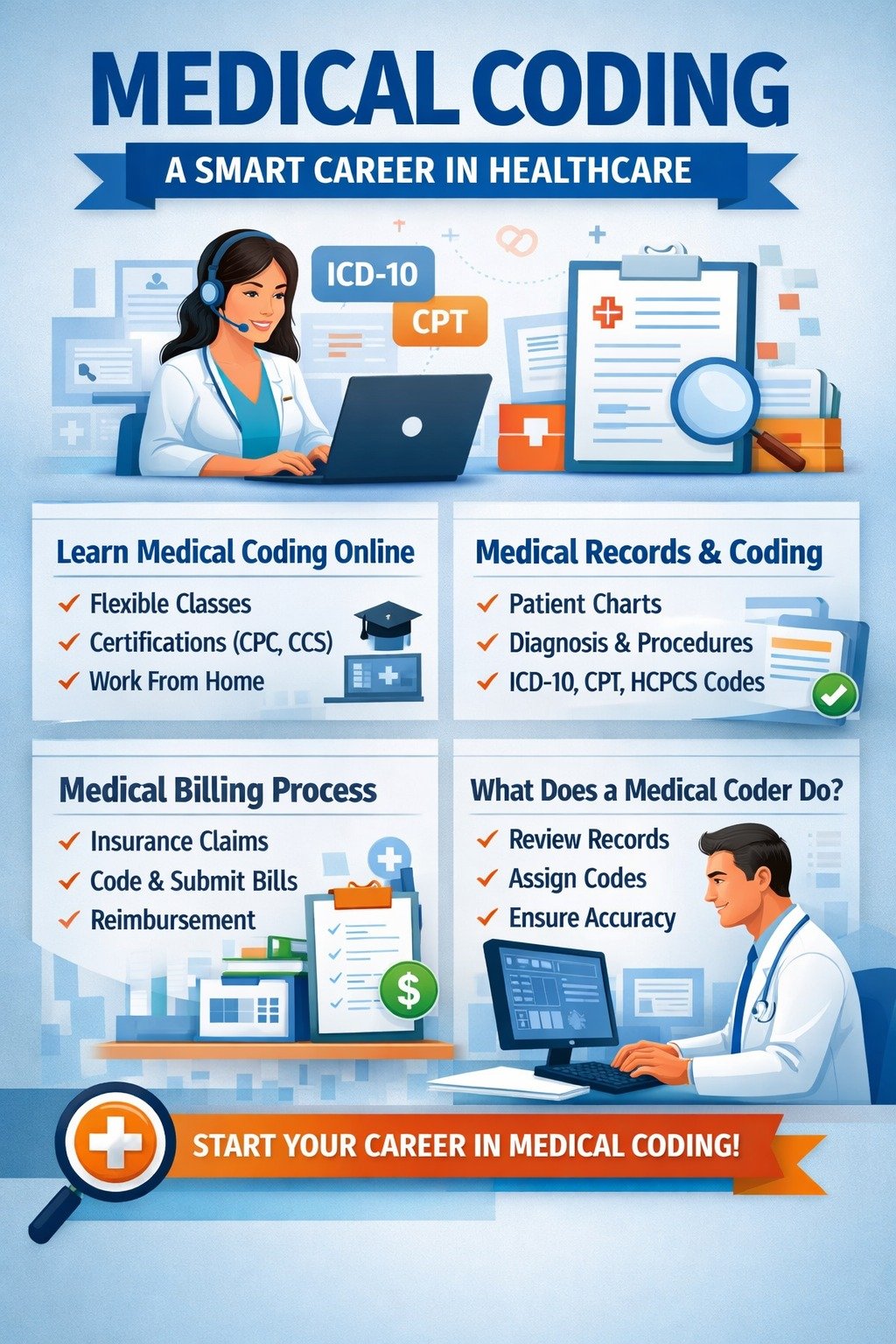
Medical coding plays a vital role in healthcare by converting medical information into standardized codes used for billing, insurance claims, and data analysis.
In this blog, we will understand:
- What medical coding is
- Advantages of online medical coding training
- What medical records are and how they are used
- What a medical coder actually does in real work
What Is Medical Coding?
Medical coding is the process of translating medical diagnoses, procedures, services, and equipment into universal alphanumeric codes. These codes are derived from medical documentation such as doctor notes, lab reports, discharge summaries, and operative reports.
The most commonly used coding systems are:
- ICD-10-CM – Diagnosis codes
- CPT – Procedure codes
- HCPCS – Supplies and services codes
Medical coding ensures:
- Accurate medical billing
- Faster insurance claim processing
- Proper reimbursement to hospitals and doctors
- Compliance with healthcare regulations
Top keywords: medical coding course, medical coding training, ICD-10 coding, CPT coding, healthcare jobs, medical coding career
Advantages of Online Medical Coding Learning
With digital education growing fast, online medical coding courses have become the preferred choice for students and working professionals.
1. Learn From Anywhere
Online learning allows you to attend classes from home without relocating. This is ideal for students, freshers, homemakers, and working professionals.
2. Flexible Timings
Most online medical coding training programs offer:
- Live instructor-led classes
- Recorded sessions for revision
- Weekend or evening batches
3. Cost-Effective
Online courses reduce expenses such as travel, accommodation, and printed materials, making medical coding education more affordable.
4. Access to Industry Experts
Reputed online medical coding institutes provide training from AAPC / AHIMA certified trainers with real-time industry experience.
5. Certification & Placement Support
Many online programs offer:
- Certification exam guidance (CPC, CIC, CRC, CCS, BCHH-C)
- Mock tests and exam preparation
- Placement assistance and interview support
Top keywords: online medical coding course, medical coding online training, CPC online course, medical coding certification, work from home medical coding
What Are Medical Records?
Medical records are official documents that contain a patient’s complete healthcare information. These records are created by healthcare providers during patient visits, treatments, and hospital stays.
Common Types of Medical Records:
- Patient demographics
- Physician progress notes
- History and physical examination (H&P)
- Operative reports
- Discharge summaries
- Lab reports and radiology reports
- Medication records
Medical records are maintained in:
- Electronic Health Records (EHR)
- Electronic Medical Records (EMR)
How Medical Records Are Used in Medical Coding and Billing
Medical records are the foundation of medical coding and billing. A medical coder carefully reviews these documents to extract accurate information.
Role of Medical Records in Coding:
- Identify patient diagnoses
- Determine procedures performed
- Assign correct ICD-10, CPT, and HCPCS codes
- Ensure documentation supports the codes
- Avoid errors, denials, and audits
Role in Medical Billing:
- Codes are sent to insurance companies
- Claims are generated based on coded data
- Accurate records ensure timely reimbursement
Incorrect or incomplete documentation can lead to:
- Claim denials
- Revenue loss
- Legal and compliance issues
What Does a Medical Coder Do in Real Work?
A medical coder’s real-time job goes far beyond learning codes in a classroom. In actual work environments such as hospitals, clinics, and billing companies, medical coders perform critical responsibilities.
Daily Responsibilities of a Medical Coder:
- Review patient medical charts and documents
- Analyze diagnoses and procedures
- Assign accurate medical codes
- Follow coding guidelines and payer rules
- Communicate with physicians for clarification
- Ensure compliance with HIPAA regulations
- Reduce claim rejections and audits
Medical coders work in:
- Hospitals
- Clinics
- Medical billing companies
- Insurance firms
- Work-from-home (remote coding roles)
With experience and certifications, medical coders can grow into roles such as:
- Senior Medical Coder
- Coding Auditor
- Coding Trainer
- Compliance Analyst
Conclusion: Why Choose Medical Coding as a Career?
Medical coding is a future-proof healthcare career with strong demand, global opportunities, and excellent growth potential. With the right training, certification, and practical exposure, candidates can build a stable career in medical coding and billing.
If you are looking for a career that combines healthcare knowledge, technology, and job security, medical coding is the right choice.